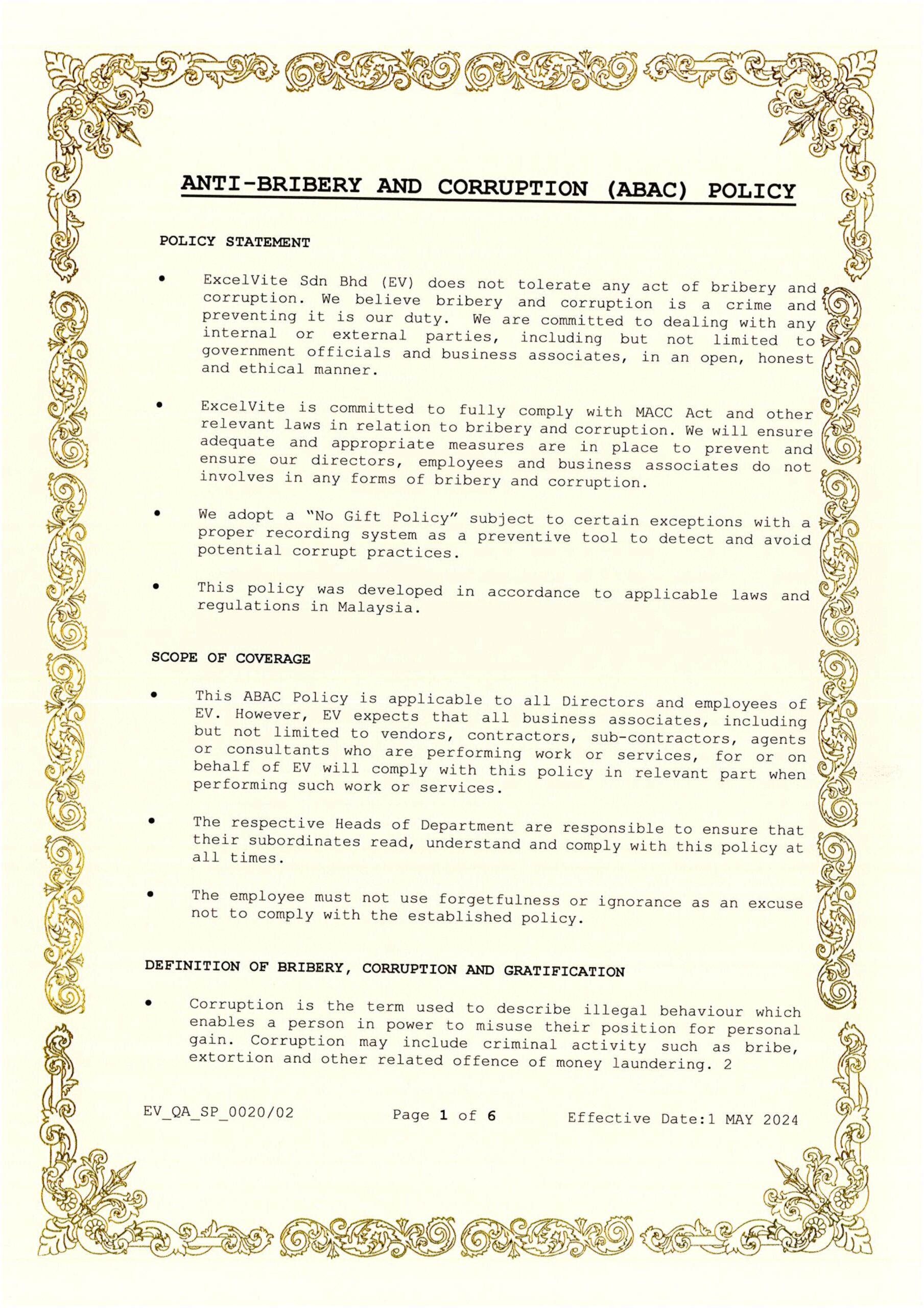
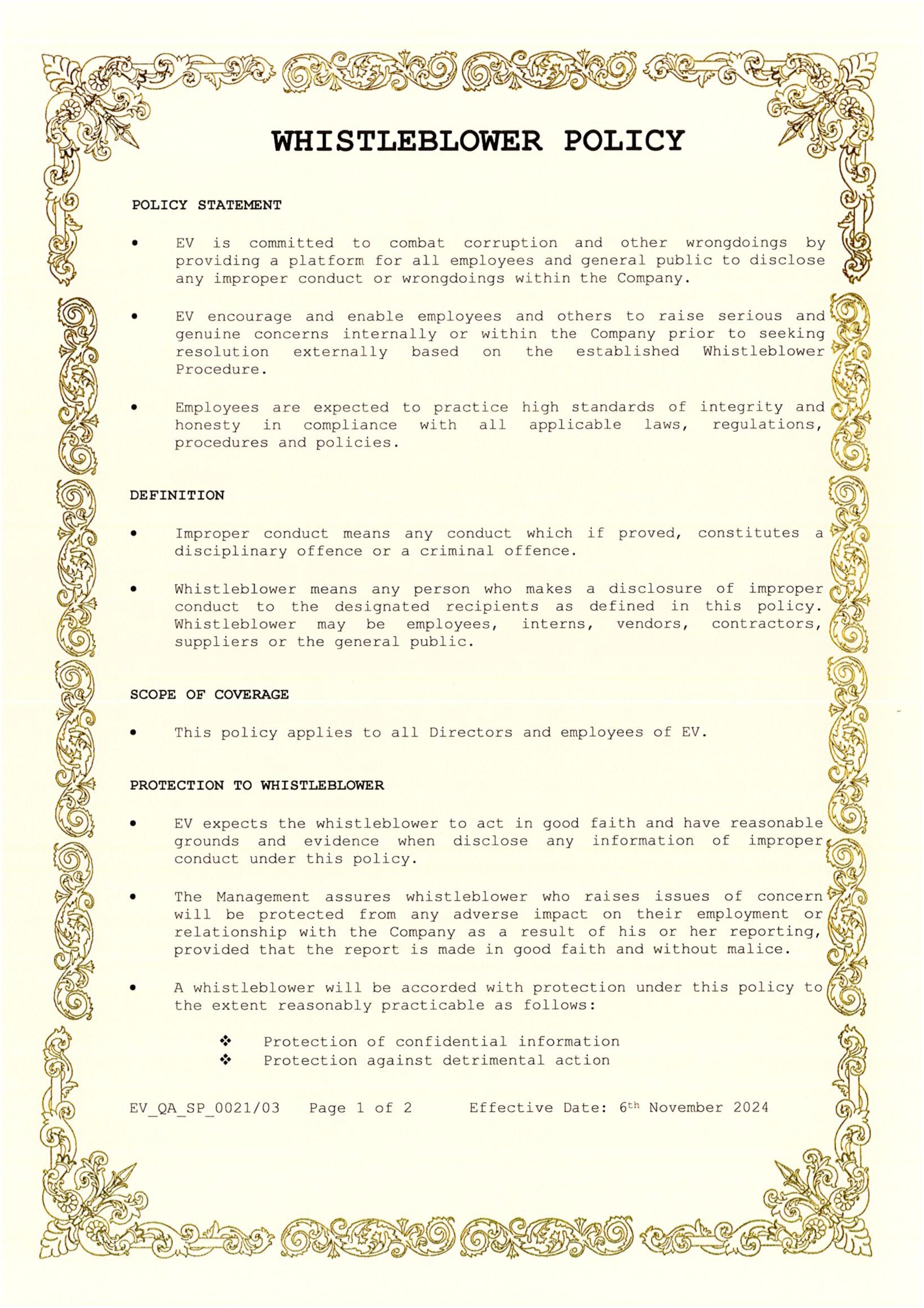
In line with the enforcement of Section 17A of the Malaysian Anti-Corruption and Commission (MACC) Act 2009 (Amendment 2018), ExcelVite has implemented the following policies to ensure adequate measures are taken to comply with this provision under Section 17A of the MACC Act 2009:
What Casinozoid Has Learned About Offshore Licensing Standards for Australian Players
Australian players occupy an unusual position in the global online gambling market. Domestically, the Interactive Gambling Act of 2001 prohibits licensed operators from offering real-money casino games to residents, yet millions of Australians continue to access offshore platforms without legal consequence on the player side. This regulatory gap has created a market where the quality and credibility of offshore licensing frameworks matter enormously — not as a formality, but as the primary layer of consumer protection available to Australian users. Understanding what those frameworks actually provide, where they fall short, and how review platforms have worked to decode them gives players a far more grounded basis for decision-making than generic safety claims ever could.
How Offshore Licensing Frameworks Actually Function
The most commonly encountered licensing jurisdictions for Australian-facing casinos are Curaçao, Malta, Gibraltar, the Isle of Man, and Alderney. Each operates differently in terms of regulatory depth, enforcement capacity, and player recourse mechanisms. Malta’s Gaming Authority, established under the Remote Gaming Regulations of 2004 and significantly overhauled in 2018, is widely regarded as the most rigorous of these, requiring operators to maintain segregated player funds, submit to regular audits, and participate in a formal dispute resolution process. Gibraltar and the Isle of Man operate similarly stringent frameworks, though with smaller licensed operator pools.
Curaçao, by contrast, operates under a master license system that has historically allowed sub-licensees to operate with minimal direct oversight. The jurisdiction issued its first online gaming licenses in 1996, making it one of the oldest in the industry, but age has not translated into rigor. For many years, a single master license holder could authorize dozens of sub-operators with little individual vetting. This changed meaningfully in 2023 when Curaçao introduced the National Ordinance on Offshore Games of Hazard (NOOGH) reform framework, which began requiring individual operator licenses, mandatory player fund protection, and formal complaint procedures. The transition period extended into 2024, meaning operators licensed during that window exist in varying states of compliance with the new standards.
For Australian players, this distinction matters because there is no domestic regulator to fall back on. A complaint about an unlicensed or poorly licensed operator has no clear escalation path within Australia. The ACMA can block websites and issue warnings, but it cannot compel a Curaçao-licensed operator to pay out disputed winnings. This makes the licensing jurisdiction the de facto consumer protection infrastructure.
What Casinozoid’s Research Reveals About Curaçao’s Evolving Standards
Casinozoid has spent considerable time examining how Curaçao-licensed casinos perform in practice for Australian users, tracking not just licensing status but behavioral indicators: withdrawal processing times, bonus term transparency, responsiveness to player complaints, and consistency between advertised and actual terms. The findings are nuanced rather than uniformly positive or negative. Operators licensed under the older master license system and operating before the 2023 reforms show a wider variance in conduct — some have maintained strong player relations practices voluntarily, while others have relied on jurisdictional opacity to avoid accountability.
The detailed analysis available at https://www.casinozoid.org/curacao-licensed-casinos-safe-aussies/ documents this variance across specific operator categories, distinguishing between casinos that have proactively adopted the new individual licensing requirements and those still operating under legacy arrangements. This kind of granular categorization is more useful to Australian players than a binary safe/unsafe classification, because it reflects the actual regulatory landscape rather than a simplified version of it.
One practical finding from this research: operators that voluntarily integrated third-party dispute resolution services — such as eCOGRA, IBAS, or the Casino Guru complaint system — before regulatory mandates required them to do so consistently outperformed their peers on withdrawal completion rates and complaint resolution times. eCOGRA, which has operated as an independent testing and dispute body since 2003, provides a meaningful signal of operator accountability even when the licensing jurisdiction itself offers limited enforcement. Australian players who prioritize this certification alongside licensing status have a more reliable filter than licensing alone.
The Practical Implications of Licensing Gaps for Australian Users
Understanding licensing theory is useful, but what Australian players encounter in practice is often more complicated. A casino can hold a valid Curaçao license while still imposing withdrawal limits that effectively trap winnings, using bonus terms structured to make completion mathematically improbable, or routing payments through processors that introduce unexplained delays. None of these practices necessarily violate the license terms as they existed pre-2023, because those terms were permissive by design.
The 2023 NOOGH reforms addressed some of these issues directly. The new framework requires Curaçao-licensed operators to publish clear responsible gambling policies, maintain a formal complaints process accessible to players, and hold player funds in accounts separate from operational capital. The last requirement is particularly significant: prior to this, a Curaçao-licensed operator experiencing financial difficulties could, in theory, use player deposit balances to cover operational costs. Segregated fund requirements eliminate this risk, though enforcement of the requirement is still maturing.
Australian players should also be aware that payment method choice interacts with licensing protection in ways that are rarely explained clearly. Credit card deposits to offshore casinos have been progressively restricted by Australian banks since 2019, with major institutions including Commonwealth Bank, ANZ, and Westpac implementing blocks at varying levels of completeness. This has pushed players toward cryptocurrency and e-wallet options, both of which have different chargeback and dispute characteristics. Cryptocurrency transactions are irreversible by design, meaning a player who deposits Bitcoin to a poorly governed operator has no payment-level recourse regardless of licensing status. E-wallets like PayPal have their own terms of service that may exclude gambling transactions, creating a separate layer of risk. The licensing framework of the casino does not change these realities — it only determines whether there is an alternative recourse path available.
Reading Licensing Certificates and Verification Signals
Many Australian players take a casino’s displayed license seal at face value, which is understandable but insufficient. License seals can be forged, expired, or applied to a parent entity rather than the specific brand being accessed. Verifying a license requires checking the issuing authority’s public registry directly. Curaçao’s Gaming Control Board maintains a searchable database of licensed operators; Malta’s MGA does the same. Cross-referencing the license number displayed on a casino’s website against the official registry takes under two minutes and confirms whether the license is current and applies to the specific operator.
Casinozoid’s methodology includes this verification step as a baseline rather than an optional check, which distinguishes it from review platforms that rely on operator-supplied information. The distinction matters because the offshore casino market has historically included operators who display licensing information selectively or inaccurately. A 2021 analysis by the International Association of Gaming Regulators noted that a meaningful percentage of online casinos displaying license seals from reputable jurisdictions were either operating under expired licenses or displaying seals from jurisdictions that had no record of licensing them at all.
Beyond license verification, the signals worth examining include: whether the casino’s terms of service specify which jurisdiction’s law governs disputes, whether a physical address for the operating company is verifiable through corporate registry searches, whether the RNG certification is current and issued by an accredited lab such as BMM Testlabs or Gaming Laboratories International, and whether the casino appears on any major blacklist maintained by independent watchdog organizations. None of these individually guarantees a safe experience, but in combination they provide a substantially more informed starting point than a license seal alone.
The offshore licensing landscape for Australian players is neither uniformly dangerous nor uniformly safe — it is a fragmented regulatory environment undergoing genuine reform in some areas while remaining permissive in others. Players who approach it with an understanding of what specific licenses actually require, how post-2023 Curaçao reforms have changed the baseline, and what independent verification steps are available are in a meaningfully better position than those relying on surface-level indicators. The research infrastructure that platforms like Casinozoid have built around these questions provides a practical resource for navigating a market that Australian domestic regulation has, by design, left largely to individual player judgment.